The Best Bath Towels for Sensitive Skin (2026)
Prices and picks verified as of October 2026. Independent, reader-supported reviews.


Things to Know Before You Buy
- The fiber decides how soft a towel feels. Long-staple cottons like Supima and Turkish cotton have fewer short, stubbly fibers, so they feel smoother on reactive skin than a generic bargain towel. Microfiber feels soft for a different reason: an ultra-fine, lint-free weave.
- Dyes and finishes matter more than the towel itself. Leftover dye, sizing, and fabric softener cause more reactions than the cotton itself. White and undyed towels drop one common trigger, and washing before first use drops another.
- Lint is the enemy of sensitive skin. A shedding towel leaves fibers clinging to damp skin, and they feel scratchy. Microfiber sheds next to nothing, and tightly woven long-staple cotton sheds far less than cheap short-staple cotton.
- How you dry matters too. Pat your skin instead of rubbing it, wash with a fragrance-free detergent, and skip the softener. Those habits help irritation-prone skin more than the towel you pick.
If your skin flares up after a shower, you probably blame the soap before the towel. A stiff, scratchy towel drags across skin that has lost some of its protective oils, and the leftover dyes, softeners, and shedding fibers in a cheap towel make it worse. If you have eczema, rosacea, or reactive skin, the towel you reach for decides whether you finish dry or itching.
We compared seven bath towels with sensitive skin in mind, weighing softness, lint, fiber type, and how gentle each one feels on damp skin instead of chasing the plushest or priciest option. For most people, the JML Microfiber Bath Towel ($20.00) is the gentlest pick: its ultra-fine, lint-free weave glides over skin without scratching, and it dries fast enough to stay fresh between uses. Prefer a natural fiber? The cotton picks below cover a range of budgets.
For travel and gym bags, the Rainleaf Microfiber Towel ($12.99) is a compact, fast-drying runner-up. If you want the breathable feel of natural cotton, the Lacoste Heritage Supima Cotton ($35.59) uses long-staple fiber that stays smooth, and the Chakir Turkish Linens 4-Piece set ($39.99) outfits a whole bathroom in soft, low-lint cotton for the least money. Each pick below explains who it suits.
Why You Should Trust Us
I have spent years writing about home and bath products, and skin-friendliness is the detail that gets buried under thread-count marketing. A towel that feels plush in the package can still shed lint, hold detergent residue, or turn stiff and scratchy after a month of washing, and that is what bothers sensitive skin most. I built this guide to filter for the qualities that matter when your skin reacts.
For this roundup, I focused on a narrow question: which bath towels stay soft and low-irritation over time? I read the published specs, materials, and owner feedback for dozens of towels, then kept the ones that combined gentle construction, low lint, and consistent ratings. We earn a commission if you buy through our links, but that does not decide what makes the list, and I would hand any towel here to someone with reactive skin.
How We Picked
We started with the priority that overrides the rest for sensitive skin: feel. We favored gentle fibers, long-staple cottons like Supima and Turkish cotton, organic cotton, and fine microfiber, and we ruled out the rough, short-staple blends that fill the bargain shelf. We watched lint closely, because shedding fibers cling to damp skin and scratch, and we leaned toward towels sold undyed or in simple colors, since heavy dyes trigger a lot of reactions.
From there, we balanced absorbency, durability, and value across budgets and formats, from a single quick-dry microfiber towel to full multi-piece cotton sets. We kept picks in both materials so you can choose by preference, and we held each towel to two tests: easy to buy and rated well over many reviews, not a one-off novelty.
How We Compared
We built this guide from reporting. We did not run a lab, invent a scoring rig, or set up a testing room. We compared the documented construction of each towel, its fiber type, weave, size, and listed dimensions, against what owners report after washing and using these towels for months, and we read closely for buyers who mention sensitive skin, eczema, or allergies.
We focused on the failure points that matter to reactive skin: how much lint a towel sheds, whether it stays soft or turns crunchy after repeated washing, how fast it dries so it does not breed mildew, and whether owners report itching or reactions. Where a towel has a real weakness, we name it in the "Flaws but not dealbreakers" section for that pick.
Our Picks
Bottom line: our top pick is the JML Microfiber Bath Towel 2 Pack at $19.99. The best budget option is the Rainleaf Microfiber Towel Perfect Travel & Gym & Camping at $12.99.
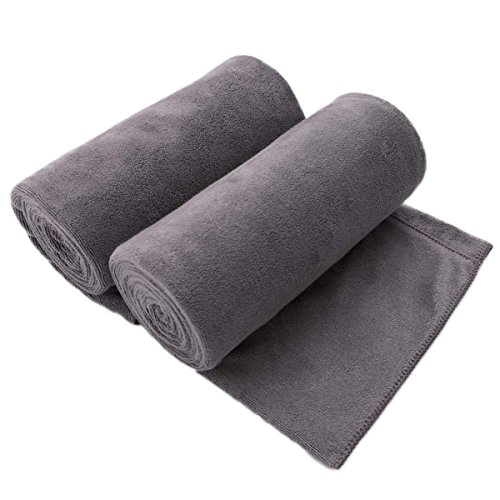


JML Microfiber Bath Towel 2
What we like
- Ultra-fine weave glides over skin without scratching
- Sheds next to no lint, even when new
- Generous 30-by-60-inch size for full coverage
- Dries fast, so it stays fresh between showers
Flaws but not dealbreakers
- Synthetic fiber feels slick to some who prefer cotton
- Less breathable than a natural-fiber towel
- Needs a gentle wash and no fabric softener to keep its grip on water
| Material | Microfiber |
| Size | 30 in x 60 in |
The JML Microfiber towel is our top pick for sensitive skin because it sidesteps the two things that bother reactive skin most: scratch and lint. Microfiber uses ultra-fine synthetic strands, so the surface that touches your skin is smoother and more uniform than the looped pile of a cotton towel, and almost no loose short fibers shed or cling to damp skin. At 30 by 60 inches it wraps all the way around, which helps when you pat dry instead of rubbing, the gentler move for irritation-prone skin.
The other advantage is speed. Microfiber wicks and releases water fast, so this towel dries in a fraction of the time a thick cotton towel needs, and that keeps the damp, musty smell that can aggravate skin from setting in. The trade-off is feel: some people find synthetic fibers slick or less breathable than natural cotton, and microfiber needs a fragrance-free wash with no fabric softener, since softener coats the fibers and kills their absorbency. New to microfiber and partial to a classic cotton hand? Look at our Lacoste or Chakir picks. For everyone else, this is the gentlest towel here for the money.
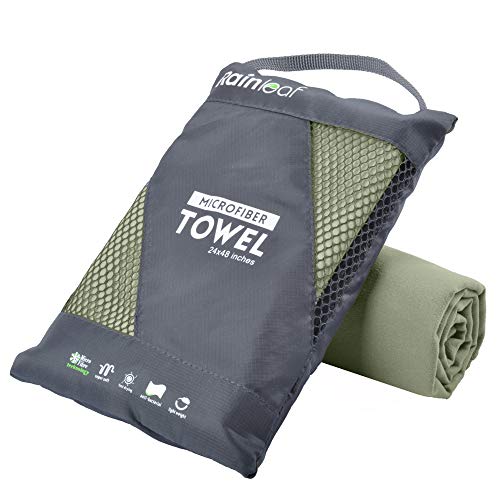


Rainleaf Microfiber Towel Perfect Travel
What we like
- Smooth, lint-free microfiber that is gentle on skin
- Dries fast and packs down to a small bundle
- Lightweight, with a snap loop for hanging
- The lowest price of any pick here at $12.99
Flaws but not dealbreakers
- At 48 by 24 inches it is smaller than a standard bath towel
- Synthetic feel that cotton purists may not love
- Thin profile means it is more a travel towel than a daily plush one
| Material | Microfiber |
| Size | 48.00" x 24.00" |
The Rainleaf is our runner-up and the towel to grab when you are on the move. It carries the same qualities that put microfiber at the top of this guide, a fine, lint-free weave that does not scratch and quick drying, in a smaller, lighter package. At 48 by 24 inches it is more compact than a full bath towel, which is the point: it rolls up tight for a gym bag, a carry-on, or a camping kit, and it dries fast enough that you can pack it again before it turns musty. For sensitive skin away from home, that mix of gentleness and fast drying is hard to beat.
The trade-offs are size and substance. It will not replace your everyday bath towel if you want plush cotton wrapped around you; it is thinner and smaller by design. At $12.99 it is the cheapest pick in the roundup, so it is a low-risk way to learn whether microfiber agrees with your skin before you buy a larger towel like our JML top pick. Wash it with a fragrance-free detergent and skip the softener, and it keeps its grip on water trip after trip.
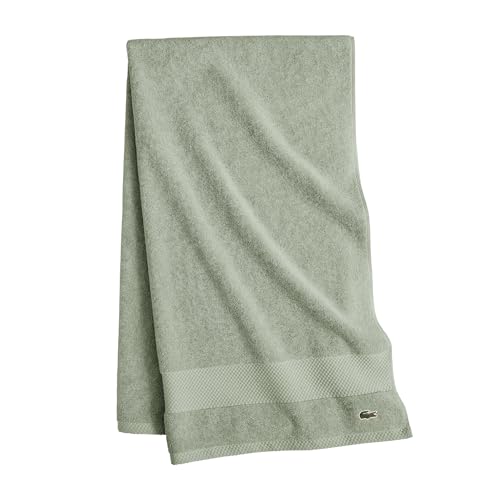


Lacoste Heritage 100% Supima Cotton
What we like
- Long-staple Supima cotton with a smooth, low-pill surface
- Breathable natural fiber that softens with washing
- Generous 30-by-54-inch bath-towel size
- From an established name with consistent quality
Flaws but not dealbreakers
- Sheds some lint over the first few washes, as cotton does
- Thicker cotton dries slower than our microfiber picks
- Single towel at this price is a step up in cost
| Material | 100% cotton |
| Size | Bath Towel 30x54 |
If you want the breathable feel of natural fiber over synthetic, the Lacoste Heritage towel is our pick. It uses 100% Supima cotton, a long-staple American cotton whose longer fibers spin into a smoother, stronger yarn with fewer of the short, stubbly ends that make cheaper cotton feel scratchy. That smoothness is the whole point on sensitive skin: the surface stays gentle, and like good cotton it loosens and softens over the first several washes instead of turning crunchy.
At 30 by 54 inches this is a full, generous bath towel, and the Lacoste name brings a consistency that a lot of no-brand cotton towels lack. The honest trade-offs come with cotton: it sheds a little lint early on, so wash it once or twice before first use, and its denser pile air-dries slower than microfiber. At $35.59 for a single towel it asks more of your budget than our cotton sets. If you want a soft, breathable, natural-fiber towel for reactive skin, the Supima cotton here earns it.
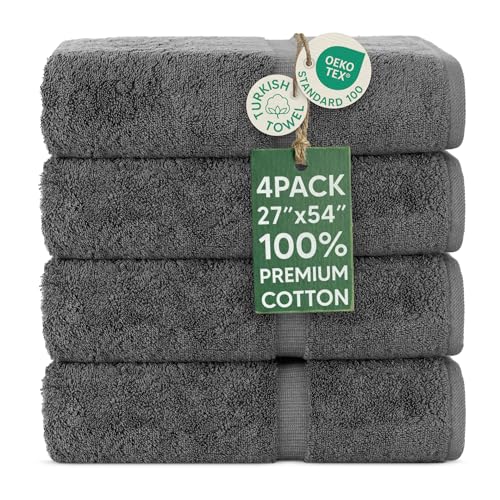


Chakir Turkish Linens 4 Piece
What we like
- Four 100% Turkish cotton towels for $39.99
- Long-staple cotton that feels soft and sheds little lint
- Lowest per-towel cost of any cotton pick here
- Gets softer and more absorbent after the first wash
Flaws but not dealbreakers
- Not as plush as a single premium towel
- Cotton dries slower than microfiber
- Color choices show fading risk if washed hot often
| Material | 100% cotton |
| Size | Bath Towel - Set of 4 |
The Chakir Turkish Linens set is our budget pick because it brings gentle cotton to a whole bathroom at a sensible price. You get four 100% Turkish cotton bath towels for $39.99, about $10 a towel, well under the cost of our single Lacoste pick. Turkish cotton is a long-staple fiber, so these towels share the advantage that makes premium cotton kind to sensitive skin: a smoother surface and less shedding than the short-staple cotton in bargain multipacks.
For a family bathroom, a guest bath, or anyone who needs more than one towel, this is the practical choice. The towels are not as thick or indulgent as a single high-end piece, and like other cotton they take longer to dry than microfiber, so give them room on the bar. Wash them once before first use to clear residual dye and bring out the softness, run a fragrance-free detergent, and skip the softener. Treated that way, this set keeps reactive skin off scratchy, lint-heavy towels for the least money.
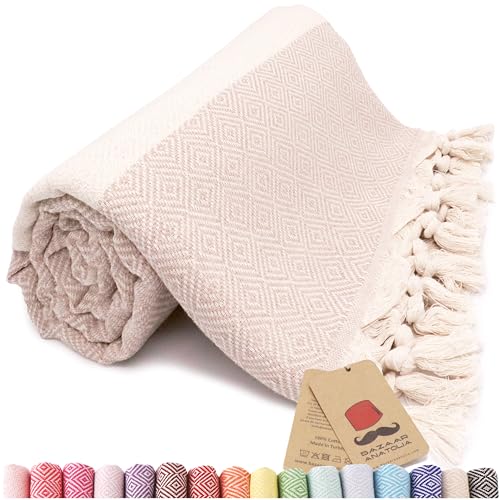


Bazaar Anatolia Turkish Bath Towel
What we like
- Large 71-by-39-inch size wraps right around with room to spare
- Lightweight Turkish cotton dries faster than thick terry
- Smooth, flat weave that is easy on the skin
- Affordable at $21.99 for an oversized towel
Flaws but not dealbreakers
- Thin, flat weave feels less plush than terry towels
- Takes a few washes to reach peak absorbency
- Loose-woven edges can fray if snagged
| Material | 100% cotton |
| Size | 71x39" |
The Bazaar Anatolia is a Turkish-style towel, sometimes called a peshtemal, and it solves a problem that terry towels create for some sensitive skin: heat and slow drying. It uses 100% Turkish cotton in a lightweight, flat weave instead of a thick looped pile, so it runs large at 71 by 39 inches yet far lighter than a standard bath towel. That flat surface stays smooth against skin, holds less water weight, and dries fast, which keeps it fresher between uses and easier to launder often, an underrated factor for irritation-prone skin.
This is the pick for anyone who finds plush terry too hot, too heavy, or too slow to dry, and it doubles as a beach or travel wrap. The honest caveat is the flip side of its lightness: it does not feel as cushiony as a thick towel, and like most flat-woven cotton it needs a few washes to soften and reach its best absorbency. At $21.99 for an oversized towel, it is a gentle way to add a breathable option to your rotation.
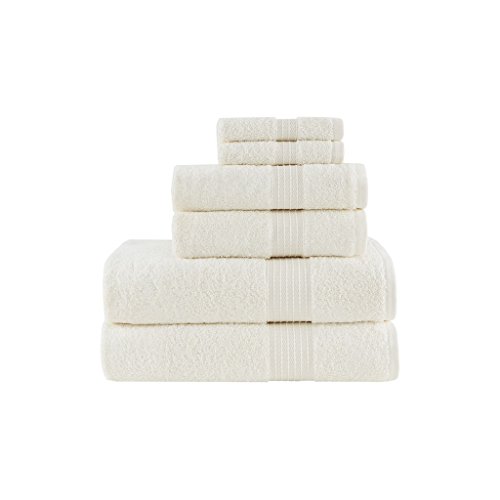


Madison Park Organic 100% Cotton
What we like
- Made from organically grown 100% cotton
- Complete six-piece set covers a bathroom in one buy
- Soft, absorbent hand that improves with washing
- From an established home-textiles brand
Flaws but not dealbreakers
- Highest price in the roundup at $43.48
- Organic cotton still sheds lint early, so wash before use
- Thicker towels dry slower than microfiber
| Material | 100% cotton |
| Size | 6-Piece |
The Madison Park set is our pick for shoppers who want organically grown cotton. With organic cotton, the draw for sensitive skin is the growing and processing: fewer harsh chemicals, so fewer residues left in a towel that touches your skin every day. This is a full six-piece set of 100% cotton in a soft, absorbent weave from a recognized home-textiles brand, so you outfit a whole bathroom at once instead of buying piece by piece.
In use, it behaves like good cotton should: soft against the skin, plusher over the first several washes. The honest caveats are price and the usual cotton trade-offs. At $43.48 this is the priciest option here, organic cotton still sheds some lint until you break it in, so wash it once or twice before first use, and the thicker pile dries slower than our microfiber picks. If an organic label gives you peace of mind and you want a coordinated set, get this one.
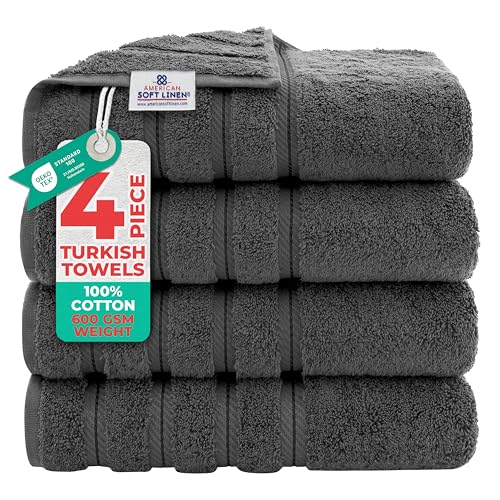


American Soft Linen Luxury 4
What we like
- Full 27-by-54-inch towels in a set of four
- Plush 100% cotton that softens with washing
- Sold in matching color options, not just white
- Four towels for $39.99
Flaws but not dealbreakers
- Thicker, plusher towels are slower to dry
- Sheds lint over the first few washes like most plush cotton
- Dyed colors should be washed before first use to release loose dye
| Material | 100% cotton |
| Size | 27x54" Bath Towel Set |
The American Soft Linen four-pack rounds out our cotton options for anyone who wants plush, full-size towels in coordinating colors. These are generous 27-by-54-inch bath towels in soft 100% cotton, sold as a set of four for $39.99, so they sit between our single-towel Lacoste pick and the budget Chakir set on both price and indulgence. The cotton has a fuller, more cushioned hand than the lightweight Turkish towels above, the feel you probably picture when you think of a comfortable bath towel.
For sensitive skin, the things to watch come with plush dyed cotton: a thicker pile dries slower, the towels shed some lint until you break them in, and colored towels can release a little loose dye early on, so run them through a wash before first use. Stick to a fragrance-free detergent and skip the softener, and you get a soft, matching set that feels like a small upgrade over basic white towels without the premium price.
Quick Comparison
| Product | Material | Price | Rating | Best for |
|---|---|---|---|---|
| JML Microfiber Bath Towel 2 | Microfiber | $20.00 | 4 | Gentlest all-rounder for sensitive skin |
| Rainleaf Microfiber Towel Perfect Travel | Microfiber | $12.99 | 4 | Travel and the gym |
| Lacoste Heritage 100% Supima Cotton | 100% cotton | $35.59 | 4 | Smooth natural-fiber feel |
| Chakir Turkish Linens 4 Piece | 100% cotton | $39.99 | 4 | Outfitting a bathroom on a budget |
| Bazaar Anatolia Turkish Bath Towel | 100% cotton | $21.99 | 4 | A light, breathable, oversized wrap |
| Madison Park Organic 100% Cotton | 100% cotton | $43.48 | 4 | Organically grown cotton in a full set |
| American Soft Linen Luxury 4 | 100% cotton | $39.99 | 4 | Plush full-size cotton in colors |
Which towel material is best for sensitive skin?
For most reactive skin, a soft 100% cotton towel is the safest starting point: breathable, free of synthetic coatings, and softer with each wash.
Should I wash new towels before using them on sensitive skin?
Yes.
The Competition
Plenty of towels did not make the cut, and the reasons are worth knowing because they are the same traps you will hit shopping for sensitive skin on your own.
Cotton-polyester blends. We ruled out more of these than anything else. Blended towels feel plush in the store and undercut our picks on price, but the polyester cuts absorbency, traps odor, and turns rough once the cotton thins out. That is why every cotton towel in this guide is 100% cotton.
Deep-dyed and scented towels. Reactive skin tends to flare at deep dye lots and "spa-scented" finishes. We skipped novelty colors and any towel sold on its fragrance, since residual dye and added scent rank among the common irritants.
Ultra-cheap short-staple multipacks. Some sets pad the piece count with thin, short-staple cotton that sheds a lot and turns scratchy fast. The per-towel price looks unbeatable until the towel shreds lint onto your skin and goes stiff within weeks. Our budget picks use longer-staple Turkish cotton instead.
Bamboo-viscose "hypoallergenic" towels. Brands aim these straight at sensitive skin, but bamboo viscose is processed rayon rather than a raw natural fiber, and quality swings from batch to batch. We stuck with cotton and microfiber, where the construction is predictable and easy to verify.
Frequently Asked Questions
Which towel material is best for sensitive skin?
For most reactive skin, a soft 100% cotton towel is the safest starting point: breathable, free of synthetic coatings, and softer with each wash. Long-staple cottons such as Supima or Turkish cotton have fewer short fibers that scratch, which is why several of our picks use them. Fine microfiber works well too thanks to its smooth, lint-free weave, though some people find synthetic fibers slick or warm, so the call comes down to preference.
Should I wash new towels before using them on sensitive skin?
Yes. New towels often carry manufacturing residues, sizing, and loose dye that can irritate sensitive skin, so wash them once or twice before first use. Use a fragrance-free, dye-free detergent, skip fabric softener because it coats the fibers and cuts absorbency, and add a half-cup of white vinegar to the first wash to set the color and strip residue. That first wash also clears the early lint and brings out the softness in cotton towels.
Are microfiber towels safe for sensitive or eczema-prone skin?
For many people, yes. Quality microfiber has a fine, lint-free weave that glides over skin without the scratch of a low-grade cotton towel, and it dries fast, which holds off the mildew that can aggravate irritation. The caveats: microfiber is synthetic and less breathable than cotton, so some eczema-prone skin does better with the natural feel of organic cotton. If you have not used microfiber before, test it on a small area first and pat your skin dry instead of rubbing.